Thank you for writing to us. One of our executive will reach back to you through your submitted medium. In case there’s an urgency, feel free to connect over WhatsApp for faster response.
Prefer calling? Dial +918048038879 (International callers) or 08048038879 (Indian callers).
Types of Combustible Dust and Tests
The Combustion Test Lab tests a wide variety of dusts, including but not limited to:
- Metals
- Plastics
- Polymers
- Organics
- Chemicals
- Grain
- Coal
- PVC
- Sugar
- Coffee
- Starch
- Paper
- Wood
- Sulfur
Our combustible dust tests
- Explosibility Screening Test (20 L and 1 m3) – determines potential for combustion.
- Dust Explosibility Test (20 L and 1 m3) – determines Pmax, dp/dtmax, and KST; measures potential explosion severity of a fuel-air mixture.
- Limiting Oxidant Concentration – determines limiting oxidant concentration at elevated temperature and pressure.
- Minimum Ignition Energy for Dusts – determines lowest spark energy required to initiate a dust explosion; assesses relative sensitivity of the sample to ignition by electrical sparks.
- Minimum Dust Layer Ignition Temperatures – determines minimum temperature at which a dust layer will ignite when exposed to a heated surface; provides a relative measure of dust ignitability.
- Particle Size Analysis – determines particle size distribution of test sample along with statistical measurements (mean, median and mode).
You May be Storing Combustible Dusts – NFPA 652 Compliance
The new combustible dust standard NFPA 652 mandated full compliance by October 2018. Are you compliant to the new code?
The first step toward compliance of NFPA 652 is to perform a combustible dust test of your facility’s processing dust. If the results are positive, a dust hazard analysis (DHA) is then required, which will identify the most susceptible equipment and effective solutions.
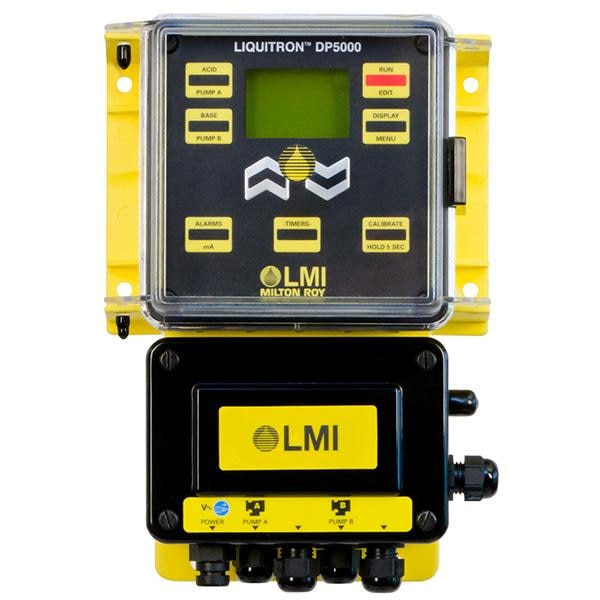
A pH controller consists of a probe to measure the current pH of the substance, chemicals to correct the pH via an injection pump, and a controller that calculates the required injection rate and activates the injection system.
Control Fluid Flow
Pinch Valves & Accessories
Available in cast iron, aluminum and PVC materials
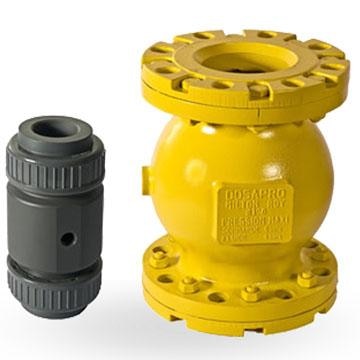
Pinch valves control the flow of fluids (liquid, gas or power) and provide a leak-proof seal when closed. They are cost-effective, simple to install and require little maintenance.
The valves are made up of a valve body and a cylindrical sleeve reinforced with natural or synthetic rubber. Typically in an open state, the valve is closed by the application of pressure between the valve body and the sleeve. This pressure is created by a fluid, usually compressed air,that crushes the sleeve in a particular direction, completely closing the valve.
Benefits:
- Direct flow with no loss of head
- Bubble free tightness even with the wettest liquids
- Viscous or paste-like liquids pass with no choking or blocking
- Abrasive meterial cause no damages
- No moving parts; hence no maintenance
- Self-cleaning; will not jam or seize
Available in cast iron, aluminum and PVC materials, we offer a complete range of full-bore valves suitable for a range of applications
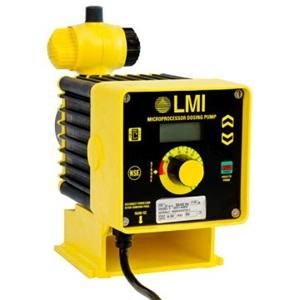
Electro Magnetic Type:
- Compact, light weight, economical
- Corrosion resistant GFPP enclosure for Series A, B, D & V pumps
- Liquid end options PP, PVC, PVDF & SS 316
- Composite Fluorofilm diaphragm for reliable and leak proof operation
- Fully encapsulated electronic circuits
- Explosion proof pumps (Series E) available
- Built-in low level switch option available
- External control by pulse or 4-20m available in Series A, B & D
Specifications:
Year after year of reliable performance. An industry standard for over 20 years, the Milton Roy electro-magnetic chemical metering Pump is a rugged, reliable choice for the harshest environments.
Its 100% enclosed chemical resistant housing provides this unit with ultimate protection, making it ideal for corrosive chemical dosing.
With a variety of models and options available, you have full flexibility to control stroke length and frequency, pressure capacity, pulse / 4.20 mA inputs and more.