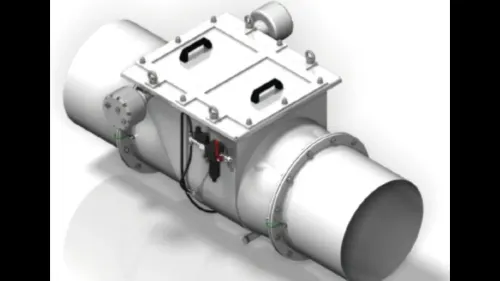


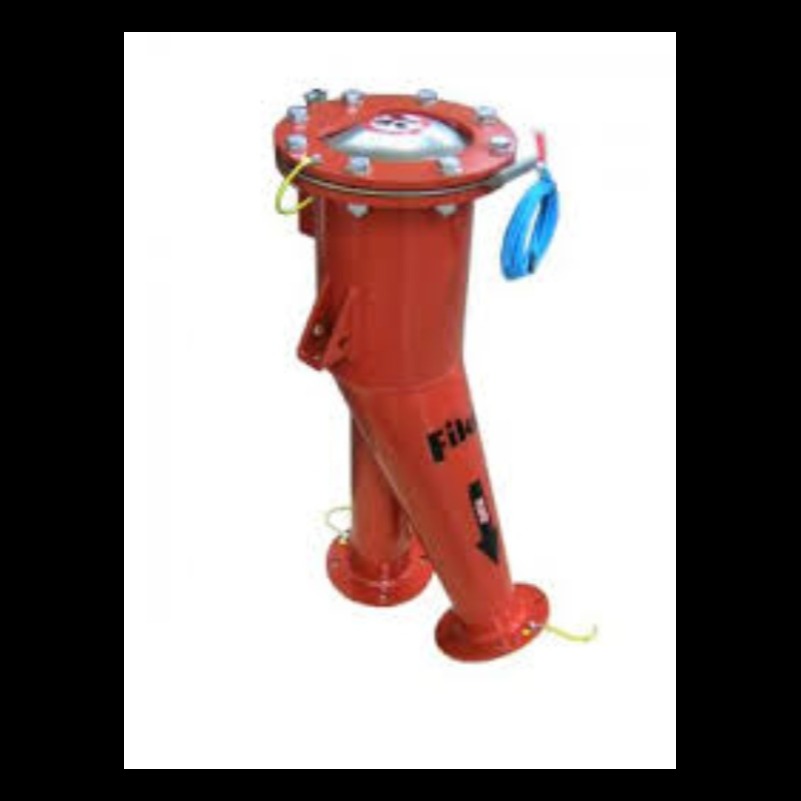
If deflagrations are allowed to propagate through pipes, they have a high probability of being able to transition from a deflagration into a detonation. A deflagration propagating through a conveying line will cause pressure piling, rapid flame acceleration and transition to detonation if not disengaged in a timely manner. The resulting explosion will not only damage the pipeline and accessories, but also make adequate protection of downstream process equipment (e.g. Dust Collectors, Dryers and Silos) virtually impossible due to the effects of flame jet ignition and pressure piling in the receiving vessel or apparatus. An explosion diverter limits the effects of explosions propagating through pipes to an acceptable and safe level. While full isolation (flame and pressure) cannot be achieved (*), the diverter will control the explosion as it propagates through the pipe down to a level that allows the use of other protective techniques and to enable the design engineer to use standard industry codes (such as NFPA, EN, VDI) to size the protection systems on the secondary receiving vessel (and the primary vessel). (*) Only explosion isolation valves or chemical barriers will prevent the explosion transfer entirely.
Features / Benefits :
• Passive explosion isolation, does not require detection and control
• Proven and tested concept
• Prevent pressure piling and flame jet ignition
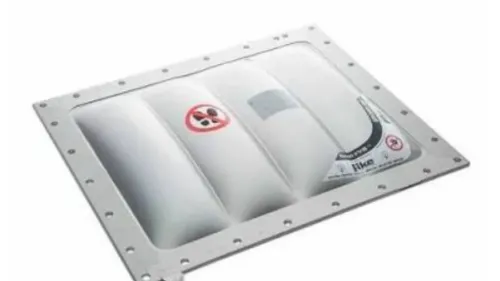
• Currently the only circular vent panel specifically designed and certified for use on Diverters
• Non fragmenting circular explosion vent panel third party approved, tested and ATEX certified
• Easy refurbishment, replace vent
• Rupture indicator to sense opening of vent panel, initiate process shutdown
• Flanged to suit site requirements
• Weather cover and insulation available on request