

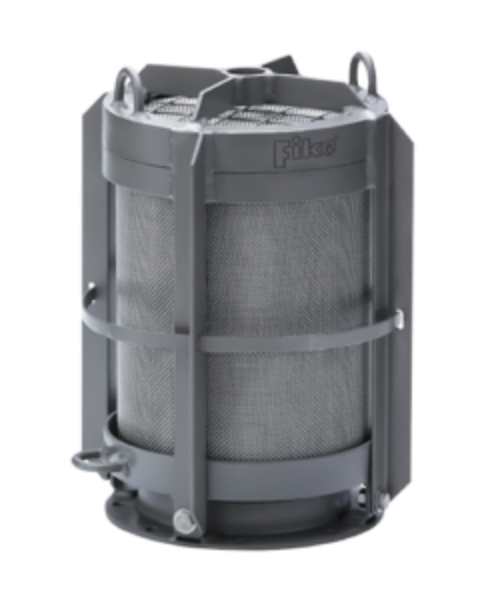
Flame quenching is a safety principle in which the flame front and hot combustion gases from an explosion are cooled and extinguished by passing through a heat-absorbing medium, preventing flame propagation beyond the protected area.
In industrial explosion protection, a flame quench device (also called a flameless vent) uses layers of metal mesh or similar materials to absorb heat and reduce the temperature of combustion gases below the ignition point, allowing pressure relief without releasing flames or sparks into the surrounding environment.
In simple terms:
Flame quenching allows an explosion to vent safely while stopping the flame from escaping.
Advantages:
Flameless explosion venting – prevents the release of flame, fireball, and hot combustion gases into the surrounding area
Safe indoor installation – allows explosion venting from equipment located inside buildings
Heat absorption technology – stainless-steel mesh absorbs combustion heat and quenches the flame front
Protection of personnel and equipment – minimizes secondary fires, injuries, and structural damage
High venting efficiency – large effective vent areas with low pressure drop
Suitable for ST1 and ST2 dusts – effective for non-metallic combustible dusts at reduced explosion pressures
Reduced explosion pressure (Pred) – typically effective at pressures ≤ 1.6 bar
No flame propagation – prevents flame transmission outside the protected process
Low maintenance – periodic inspection possible without full disassembly
Anti-static design – reduces dust accumulation and ignition risk
Extended service life – protective shields enhance durability and long-term performance
Keyword:
Flame quenching
Flameless explosion venting
Flame arrester
Explosion relief
Explosion vent
Dust explosion protection
Heat absorption
Stainless steel mesh
Flame suppression
Pressure relief
Combustible dust safety
ST1 / ST2 dust classification
Reduced explosion pressure (Pred)
Indoor explosion venting
ATEX compliant
NFPA 68 compliant
Fireball prevention
Secondary explosion prevention
Anti-static protection
Process safety